What Is a Deemed Contract: Meaning and How to get? (2026)

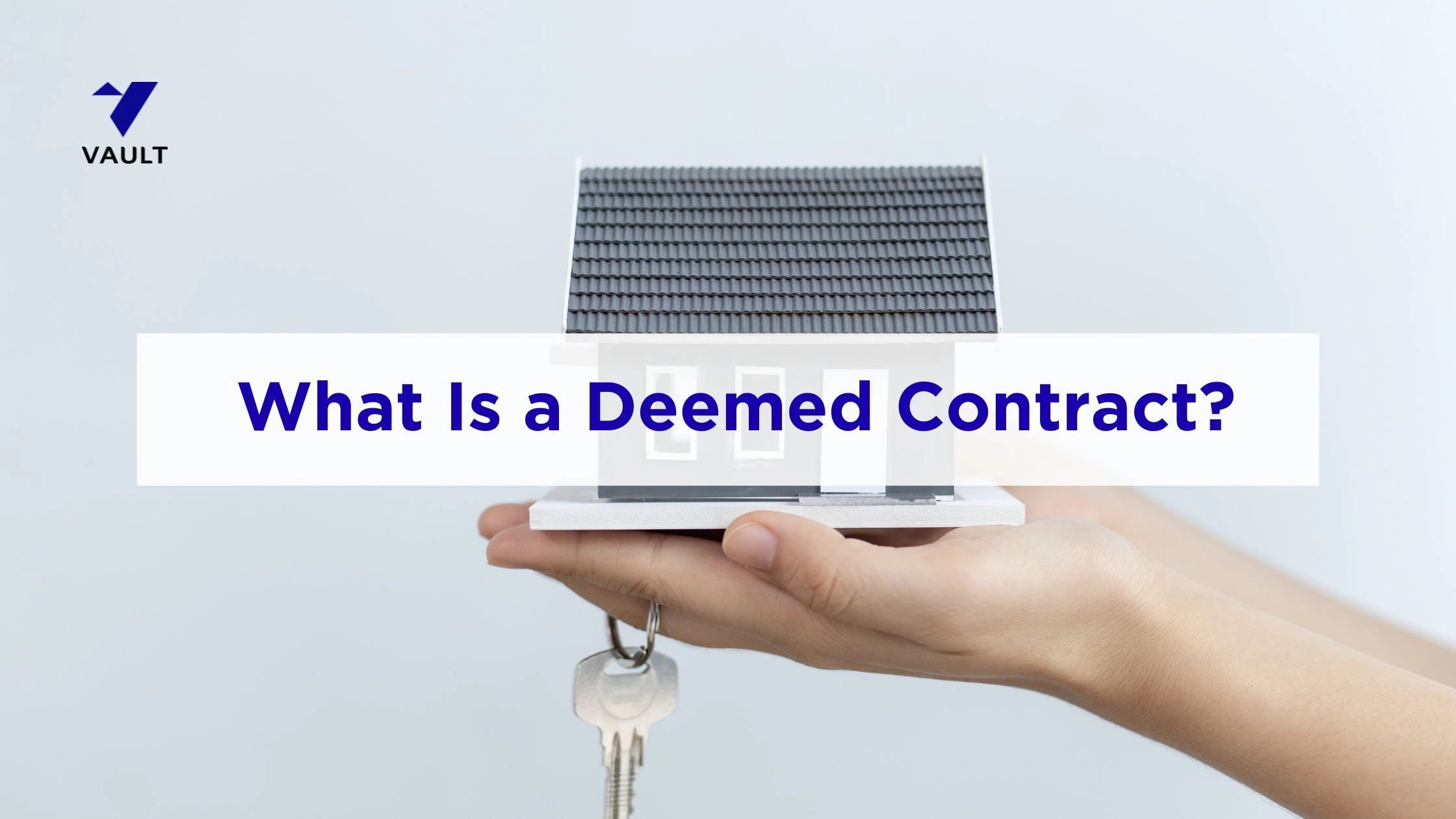
What is a deemed contract, how it differs from a valid contract, the five types under Sections 68-72 of the Indian Contract Act, and real-world examples.
Quick Summary (TL; DR)
A deemed contract is not a contract formed by offer, acceptance, and consideration between consenting parties it is a legal fiction imposed by a court to enforce an obligation in the absence of any agreement, to prevent unjust enrichment
Under Indian law, deemed contracts are recognised under Chapter V, Sections 68 to 72 of the Indian Contract Act, 1872, which the Act describes as "certain relations resembling those created by contract"
The founding principle is the Latin maxim Nemo debet locupletari ex aliena jactura: no one should grow rich out of another person's loss
There are five specific types of deemed contract under the Indian Contract Act: supply of necessaries to an incapable person, payment made on another's behalf, obligation arising from a non-gratuitous act, responsibility of a finder of goods, and liability for money received by mistake or under coercion
A deemed contract differs from a void contract, a voidable contract, and a valid contract it is not classified under any of these because it is not a contract at all; it is a court-imposed obligation that resembles one in its legal effect
What Is a Deemed Contract?
A deemed contract also called a quasi-contract or constructive contract is a fictional contract acknowledged by the court. It is not an actual contract entered into by the parties intentionally. In fact, it is not a contract at all, because the essential factors for the formation of a contract are absent.
Such cases are not contracts in the strict sense, but the Court recognises them as relations resembling those of contracts and enforces them as if they were contracts; hence the term quasi-contracts, meaning resembling a contract.
The Indian Contract Act, 1872 does not use the term "quasi-contract." Chapter V of the Act is titled "Of Certain Relations Resembling Those Created by Contract," and covers Sections 68 to 72. These sections give statutory recognition to obligations that arise by operation of law rather than by the agreement of the parties.
The concept has its origin in Roman law, obligatio quasi ex contractu and in English common law, where Lord Mansfield is considered the founder of quasi-contractual obligation.
What is a Deemed Contract? (Simple Terms)
A deemed (quasi) contract is a legal obligation imposed by law and enforced by courts to prevent unjust enrichment. It is not a contract at all in the strict sense; it is a remedy that the law treats as if it were a contract, to achieve a just outcome.
What Is the Core Principle of a Deemed Contract?
The basis of the obligation is that no one should have unjust enrichment at the cost of another. If A gets unjust enrichment at the cost of B, A has an obligation to compensate B.
This principle, prevention of unjust enrichment, is the single thread that connects all five types of deemed contract under the Act. The law does not require the parties to have agreed on anything. It simply identifies situations where one party has received a benefit at another's expense and imposes an obligation to compensate, as a matter of equity and justice.
Deemed Contract vs Regular Contract The Key Differences
Factor | Regular Contract | Deemed Contract (Quasi-Contract) |
Formation | By offer, acceptance, and consideration between consenting parties | Imposed by law no agreement between parties |
Consent | Essential | Absent no offer or acceptance |
Legal basis | Section 2(h), Indian Contract Act, 1872 | Sections 68–72, Indian Contract Act, 1872 |
Nature | Consensual parties choose to enter | Non-consensual law imposes the obligation |
Purpose | Enforce agreed terms | Prevent unjust enrichment and restore fairness |
Remedy on breach | Damages, specific performance | Restitution returning the benefit or its equivalent |
Unlike consensual contracts, these obligations arise by operation of law based on specific circumstances.
The Five Types of Deemed Contract Under the Indian Contract Act, 1872
Section 68: Supply of Necessaries to a Person Incapable of Contracting
If a person incapable of entering into a contract, or anyone whom he is legally bound to support, is supplied by another person with necessaries suited to his condition in life, the person who has furnished such supplies is entitled to be reimbursed from the property of such incapable person.
The most common example is a minor whose agreement is void in law and who cannot be personally bound for debts. However, if someone supplies necessaries to a minor, they are entitled to reimbursement from the minor's estate.
Necessaries do not mean only bare essentials like food and shelter. It means such things as may be necessary to maintain a person according to their condition in life, their status and requirements. Articles of mere luxury are excluded. The reimbursement is from the estate, not through a personal action against the incapable person.
Example: A shopkeeper supplies school books and uniform to a minor student whose father refuses to pay. The shopkeeper is entitled to reimbursement from the minor's property under Section 68.
Section 69: Reimbursement of Person Paying Money Due by Another
When a person pays money on behalf of another person who is legally bound to pay, the person making the payment is entitled to be reimbursed by the person on whose behalf the payment was made.
This section requires three conditions: the payment must be made to discharge a legal obligation of another; the payer must have a personal interest in making the payment; and the payer must not have acted voluntarily or gratuitously in paying.
Example: A tenant pays the landlord's outstanding property tax to prevent the property from being auctioned, since the tenant would lose possession if the sale proceeded. The landlord is bound to reimburse the tenant.
Section 70: Obligation of a Person Enjoying the Benefit of a Non-Gratuitous Act
If a person lawfully does something for another or delivers something to another, and such act or delivery is not intended to be done gratuitously, and the other person enjoys the benefit thereof, the latter is bound to make compensation.
The landmark case on this section is State of West Bengal v. B.K. Mondal, where the government benefited from construction work done by a contractor without a formal contract. The Supreme Court held that the government was liable to pay the contractor for the services rendered under Section 70. This section has significant application in government contracts where work is done without a formally executed agreement.
Example: A plumber urgently repairs a burst pipe in someone's absence to prevent flooding. The beneficiary is bound to compensate the plumber even though no contract was in place.
Need Help? Consult Vault Lawyer regarding your property contract matter.
Section 71: Responsibility of Finder of Goods
A person who finds goods belonging to another and takes them into their custody is subject to the same responsibility as a bailee.
This section imposes a deemed contractual obligation on a finder of goods to take reasonable care of those goods, not appropriate them for personal use, return them to the owner when found, and not sell them except in specific circumstances permitted by law. The finder does not own the goods but acquires a right against the world except the true owner.
Example: A person finds a wallet containing cash and identity documents on the street. They are obligated to take reasonable steps to find the owner and return the wallet; they cannot keep the cash simply because there was no agreement with anyone.
Section 72: Liability for Money Paid or Thing Delivered by Mistake or Under Coercion
If money or goods are delivered by mistake or under coercion, the person who received them is bound to repay or return it.
This section covers two separate situations: delivery by mistake and delivery under coercion. The word "mistake" here includes both mistake of fact and, following the Supreme Court's ruling in Sales Tax Officer, Banaras v. Kanhaiya Lal Mukund Lal Saraf, mistake of law. Payment of taxes under a mistaken belief about the applicable law is recoverable under this section.
Example: A person accidentally transfers ₹50,000 more than intended in a bank payment. The recipient is legally obligated to return the excess amount even though they received it without any wrongdoing.
Doctrine of Quantum Meruit in Deemed Contracts
Deemed contracts are supported by the doctrine of quantum meruit meaning "as much as one has earned." Quasi-contracts are based on the principle of the Latin term Quantum Meruit, which denotes "as much as he deserved." It purely depends on the doctrines of equity and justice.
This doctrine allows a party to recover the reasonable value of work done or goods supplied, even in the absence of a formal agreement, where the other party has benefited. It prevents the unjust enrichment of a party who receives services or goods without paying simply because no formal contract was concluded.
Deemed Contract vs Other Types of Contracts
Type | How Formed | Valid in Law |
Valid contract | Offer, acceptance, consideration, free consent, lawful object | Yes fully enforceable |
Void contract | Missing essential elements or unlawful object | No no legal effect |
Voidable contract | One party's consent obtained by fraud, coercion, or misrepresentation | Yes, until rescinded by aggrieved party |
Void agreement | Never attains contractual force | No effect from inception |
Deemed/quasi-contract | No agreement imposed by law to prevent unjust enrichment | Enforceable as if a contract but it is not one |
Need Help? Consult Vault Proptech regarding your property contract matter.
How Are Deemed Contracts Relevant in Real Estate?
In the property and construction context, deemed contracts arise most commonly under Section 70, where work is done by a contractor on a government or private project without a formally executed written agreement.
In State of West Bengal v. B.K. Mondal, the Supreme Court's ruling under Section 70 established that where a government benefits from construction work in the absence of a formal contract, it must pay for that work. This principle has been applied repeatedly in disputes between contractors and government bodies where bureaucratic processes delayed the formal signing of a contract even as work proceeded.
A builder who begins construction work on a verbal instruction from a developer, without a written contract, may rely on Section 70 to recover the reasonable value of work done if the developer subsequently refuses to pay or denies the arrangement.
Is There a Format for a Deemed Contract?
No , because a deemed contract is not an agreement at all; there is no format, no template, and no document to draft. It is a court-imposed obligation that arises from specific factual circumstances. The remedy is pursued through a civil suit seeking restitution or compensation, not by presenting a document for registration.
The evidence in such a suit consists of the facts giving rise to the deemed obligation, receipts, correspondence, proof of work done, proof of benefit received, rather than a signed agreement between the parties.
What Remedies Are Available Under a Deemed Contract?
The primary remedy under a deemed contract is restitution, returning the benefit received or its monetary equivalent. Through quasi-contract, an element of fairness that seeks to remedy situations where a party benefits unjustly at the expense of another without actual agreement is enforced.
Additionally, compensatory damages may be available where the aggrieved party has sustained a loss as a consequence of the quasi-contractual obligation. Courts also have equitable jurisdiction to grant relief that prevents ongoing unjust enrichment.
Property Obligations and Contract Matters: Vault Proptech Assists
Vault Proptech assists property owners, contractors, and housing societies in Bengaluru with understanding their legal rights and obligations in situations where formal agreements are absent or incomplete, and coordinates with property lawyers for civil proceedings where quasi-contractual remedies are relevant.
Need Help? Consult Vault Proptech regarding your property contract matter.