Greater Bengaluru Authority (GBA): What It Is and Why It Matters

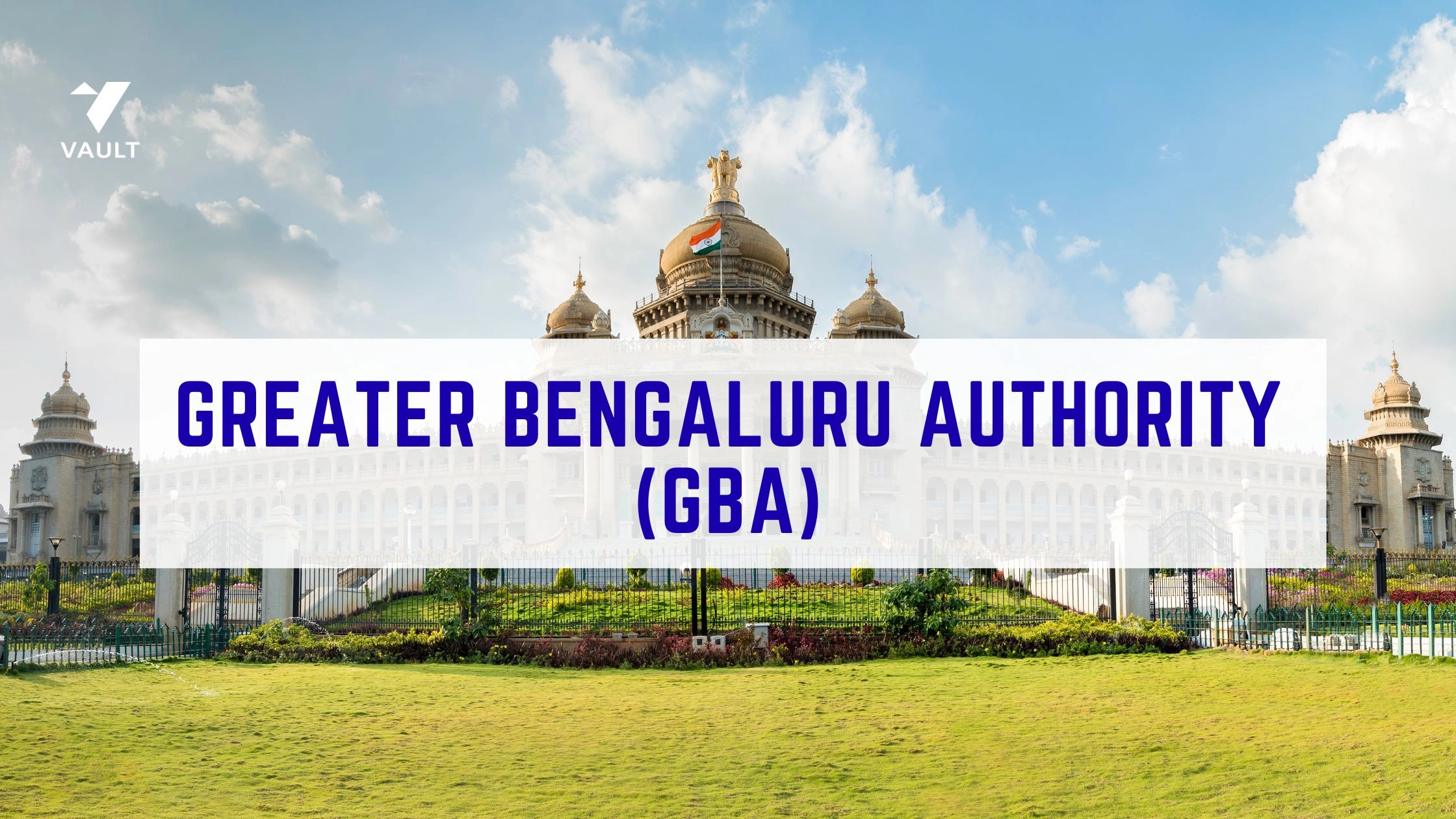
The Greater Bengaluru Authority replaced BBMP on Sept 2, 2025. Learn what GBA is, its 5 city corporations, how it affects your property tax, Khata, and what changes.
Quick Summary (TL; DR)
The Greater Bengaluru Authority (GBA) replaced BBMP on September 2, 2025. It is the new apex civic body for Bengaluru, created under the Greater Bengaluru Governance Act, 2024.
GBA is an umbrella body. Under it sit five city corporations: North, South, East, West, and Central Bengaluru. These handle day-to-day services, property tax, Khata, roads, and garbage.
The GBA itself handles strategic planning, infrastructure coordination, Metro, BDA oversight, master plan, and large cross-city projects.
Chaired by Chief Minister Siddaramaiah. Chief Commissioner: M. Maheshwar Rao (IAS). 75 members, including ministers, MLAs, mayors, and agency heads.
For property owners: property tax, Khata, and e-Aasthi continue on the same portals. Your dues, PID, SAS ID, and documents remain valid.
Key change: Governance is now decentralised. Smaller corporations = more responsive local governance (in theory).
What Is the Greater Bengaluru Authority?
GBA: The New Apex Civic Body for Bengaluru
The Greater Bengaluru Authority (GBA) is the apex urban governance body for Bengaluru, established under the Greater Bengaluru Governance Act, 2024 (Act 36 of 2025).
It replaced the Bruhat Bengaluru Mahanagara Palike (BBMP), which had been Bengaluru's single municipal body since 2007. BBMP was officially dissolved on September 2, 2025, when GBA became fully operational.
GBA does not do everything BBMP used to do. It is the strategic brain, not the ground-level service provider.
Day-to-day civic services are now handled by five newly created city corporations under the GBA's umbrella. The GBA coordinates, plans, and supervises the corporation's execution.
Body | What It Does | Headed By |
Greater Bengaluru Authority (GBA) | Strategic planning, master plan, inter-agency coordination, large infrastructure projects, oversight of city corporations and parastatals (BDA, BWSSB, BMRCL) | Chief Minister (ex-officio Chairperson); Chief Commissioner as Member Secretary |
City Corporations (5) | Day-to-day civic services: property tax, Khata, roads, garbage, water, parks, ward-level works | Mayor (elected) + IAS Commissioner |
Ward Committees | Grassroots governance: ward-level issues, citizen feedback, | Area Sabha - Elected Councillors + resident representatives |
Quick Reference: GBA at a Glance (Verified as of April 2026)
Established: May 15, 2025 (operational from September 2, 2025)
Legal basis: Greater Bengaluru Governance Act, 2024 (Act 36 of 2025)
Replaced: Bruhat Bengaluru Mahanagara Palike (BBMP)
Area covered: 712 sq km (Greater Bengaluru Urban Agglomeration)
City Corporations under GBA: 5 (North, South, East, West, Central Bengaluru)
Wards across 5 corporations: 369
GBA Chairperson: Chief Minister of Karnataka (ex-officio) CM Siddaramaiah
GBA Vice-Chairperson: Deputy Chief Minister DK Shivakumar
Chief Commissioner: M. Maheshwar Rao (IAS)
Total GBA members: 75
Official portal: gba.karnataka.gov.in
Why Was the Greater Bengaluru Authority Created?
The Problems BBMP Could Not Solve Alone
BBMP was formed in 2007 by merging the old Bangalore Mahanagara Palike with seven city municipal councils and one town panchayat. At the time, it was a bold move to unify Bengaluru's fragmented civic governance.
By 2015, it had become a problem.
Bengaluru had grown to 12 million people across 709 sq km. One body, one Commissioner, one set of councils managing roads, property tax, water, garbage, building approvals, parks, and Metro coordination simultaneously. The result was predictable.
Problem: How It Manifested in Bengaluru
Too big to govern effectively: A single BBMP Commissioner could not respond to ward-level issues in 243 wards across a city larger than Mumbai
Fragmented agency coordination: BDA, BWSSB, BESCOM, BMRCL, BMTC all operated in silos. Roads were dug for water pipes and then dug again for Metro. No single body had oversight.
Infrastructure vs services confusion: BBMP handled garbage and also approved the master plan. Metro expansion and pothole repair were the same body's problem.
Missing elected representation: BBMP elections were last held in 2020. By 2025, the body had been running under appointed administrators for 5+ years without elected councillors.
No decentralisation: Ward committees had little power. Citizens had no real mechanism to escalate local issues or influence ward-level spending.
Peri-urban governance gap: Areas like Sarjapur, Devanahalli, and Yelahanka were neither fully urban nor fully rural. Gram Panchayats and BBMP boundaries overlapped in confusing ways.
The BBMP Restructuring Committee in 2015 first proposed a three-tier model: an apex coordinating authority, multiple smaller corporations, and empowered ward committees. The Greater Bengaluru Governance Act 2024, passed 10 years later, was that proposal becoming law.
How Is the Greater Bengaluru Authority Structured?
Three Tiers of Governance From City Hall to Your Ward
The GBA operates on a three-tier governance model replacing BBMP's four-tier model that included Zonal Committees (which have been abolished).
Tier | Body | Size / Composition | What They Handle |
Tier 1 | Greater Bengaluru Authority (GBA) | 75 members: CM (Chair), 7 ministers, all MLAs/MPs from area, Mayors, Commissioner of Police, BWSSB, BESCOM, Metro heads | Master plan, strategic infrastructure, inter-agency coordination, BDA supervision, large projects crossing corporation boundaries |
Tier 2 | City Corporations (5) | Each: Mayor + IAS Commissioner + elected Councillors (up to 150 per corporation) | Property tax, Khata, roads, garbage, parks, health, sanitation, building approvals, ward-level works |
Tier 3 | Ward Committees (369 wards) | Elected Councillor + resident members via Area Sabha | Ward-level issues, local service delivery, citizen grievances, grassroots spending oversight |
The 5 City Corporations Under GBA
Bengaluru has been divided into five city corporations. Each corporation is a separate civic body with its own Mayor, Commissioner, budget, and property records.
The 5 City Corporations of Bengaluru (under GBA)
North Bengaluru City Corporation: Covers Yelahanka, Hebbal, Kodigehalli, Dasarahalli, Vidyaranyapura, and north Bengaluru zones
South Bengaluru City Corporation: Covers Jayanagar, JP Nagar, Banashankari, BTM Layout, Basavanagudi, Kanakapura Road belt
East Bengaluru City Corporation: Covers Indiranagar, Whitefield, Mahadevapura, KR Puram, HAL, Domlur, Kadugodi
West Bengaluru City Corporation: Covers Rajajinagar, Yeshwantpur, Malleswaram, Tumkur Road belt, Vijayanagar
Central Bengaluru City Corporation (Bruhat Bengaluru): Covers city centre areas: MG Road, Brigade Road, Shivajinagar, Koramangala, HSR Layout, Richmond Town
Note: Final ward-level boundaries within each corporation are being delimited as of April 2026. Your specific ward assignment will depend on the final ward delimitation order. Verify your property's corporation at gba.karnataka.gov.in or bbmptax.karnataka.gov.in.
Who Is in the GBA?
Role and Person / Position
Chairperson (ex officio): Chief Minister of Karnataka CM Siddaramaiah
Vice-Chairperson: Deputy Chief Minister DK Shivakumar (Minister for Bengaluru Development)
Chief Commissioner (Member Secretary): M. Maheshwar Rao (IAS) appointed August 26, 2025
Other members (voting): State ministers from Bengaluru constituencies, all MPs and MLAs from the area, Mayors of all 5 corporations, Commissioner of Police, Chief Town Planner, heads of BWSSB, BESCOM, Metro, BMTC
Executive Committee: Headed by Minister for Bengaluru Development. Manages day-to-day coordination.
Sectoral Expert Committees: Advisory bodies for specific domains transport, water, infrastructure
Bengaluru Metropolitan Planning Committee (MPC): Develops the draft development plan for the Greater Bengaluru Area. Chaired by CM.
Total GBA members: 75
What Does the GBA Actually Do?
GBA Roles vs City Corporation Roles: The Division of Powers
The most important thing to understand is what GBA does versus what your city corporation does. They handle different things.
Function | Handled By GBA | Handled By City Corporation |
Property tax collection No | No | Yes your city corporation collects property tax |
e-Khata / Khata transfer | No | Yes through e-Aasthi portal, managed by the corporation |
Road maintenance (local) | No | Yes ward-level roads and drains |
Garbage collection | No | Yes solid waste management at ward level |
Building plan approval | Large projects / policy only | Yes building plan approvals in your ward |
Master Plan for Bengaluru | Yes GBA is the Planning Authority | No |
Metro expansion projects | Yes coordinates BMRCL | No |
BDA oversight | Yes BDA comes under GBA coordination | No |
BWSSB / BESCOM coordination | Yes GBA supervises | No |
Peripheral Ring Road, flyovers, major infra | Yes cross-corporation projects | No |
Ward committee empowerment | Policy framework | Yes directly supports ward committees |
Property enforcement / defaulter action | Oversees | Yes GBA notified auction/seizure policy, corporations execute |
The March 2026 GBA announcement on property tax defaulters (seizing properties of chronic defaulters) came from GBA as a policy directive but the actual enforcement and auction is carried out by individual city corporations.
How Does GBA Help Bengaluru?
What the Reform Is Designed to Fix
The rationale for GBA is straightforward. Here is what the reform intends to achieve and where it has already.
Problem Under BBMP | What GBA Aims to Fix | Current Status (April 2026) |
Single body governing 12 million people unresponsive | 5 smaller corporations each managing 2–3 million people with dedicated Commissioner and Mayor | Active. 5 corporations functioning from Sept 2, 2025. Ward delimitation ongoing. |
No elected governance since 2020 | Elections to 5 corporations expected in 2026, restoring democratic accountability | Ward delimitation underway. Elections targeted for mid-2026. |
BDA, BWSSB, BMRCL operating in silos | GBA brings all agencies under one coordinating roof | Integration in progress. Metro and BWSSB plans now reviewed at GBA level. |
No coherent master plan for greater Bengaluru | GBA as the Planning Authority creates a unified Bengaluru master plan | Metropolitan Planning Committee constituted. Draft plan in progress. |
B-Khata properties in grey zone | GBA e-Aasthi expansion to digitise and regularise property records across all corporations | 13 lakh e-Khatas unlocked (April 25, 2026). e-Aasthi expansion ongoing. |
Peri-urban governance gap | Clear corporation boundaries absorb previously ambiguous areas | Final boundaries being notified. BDA layouts transferred to GBA oversight. |
Property tax enforcement gap | GBA policy: attach and seize chronic defaulter properties. ₹437 crore in dues outstanding. | Active enforcement from early 2026. 7 properties auctioned as of Feb 2026. |
What Changes for Bengaluru Property Owners Under GBA?
The Practical Impact on Your Property, Tax, and Documentation
This is what matters most to property owners. Here is the exact picture as of April 2026.
What | Changed? | Detail |
Property tax portal | No change | Still bbmptax.karnataka.gov.in. PID, SAS ID, and payment history remain valid. |
Property tax rates | No change (yet) | Unit Area Value system continues. Zone A–F rates unchanged. 5% rebate (till May 31, 2026). 2% monthly penalty for late payment. |
e-Khata / e-Aasthi | Expanded, not changed | Still bbmpeaasthi.karnataka.gov.in. 13 lakh e-Khatas unlocked April 25, 2026. Process unchanged. |
Khata transfer process | No change | Same e-Aasthi portal, same documents, same mutation fee (2% of stamp duty paid, min ₹500). |
Which corporation handles your property | Changed | Your property now belongs to one of 5 corporations (North/South/East/West/Central) instead of BBMP. The relevant corporation handles your Khata and tax. |
BBMP ward office | Being renamed / reorganised | Ward offices continue to function. Some may be renamed or reassigned to the new corporation structure. |
BDA layout properties | Transferred to GBA oversight | BDA layouts that were previously outside BBMP are now under GBA’s oversight. Khata remains valid. |
Property enforcement | Stricter | GBA has announced a policy to attach, auction, and directly acquire properties of chronic tax defaulters (March 2026 announcement). |
Building plan approvals | Under corporation | Large cross-boundary projects go through GBA. Local building plan approvals remain with your city corporation. |
Property records (existing) | Valid and continuous | Sale deeds, ECs, and Khata issued under BBMP continue to be legally valid under GBA corporations. |
Transition Issues to Watch Out For (April 2026)
Zone reclassification: Some properties have seen unexpected changes in tax zone classification during the BBMP-to-GBA transition. If your FY 2025-26 tax demand looks unusually different, check with the concerned city corporation.
Khata transfer midway: If your Khata transfer was in progress on September 2, 2025 (BBMP dissolution date), it may need to be re-filed or tracked with the new corporation. Check status on bbmpeaasthi.karnataka.gov.in.
Address inconsistencies: Some GBA records show old addresses not updated during the handover. If your portal records are inconsistent, approach the city corporation office for reconciliation.
Corporation identification: Not all property owners know which of the 5 corporations their property belongs to. Verify at bbmptax.karnataka.gov.in or gba.karnataka.gov.in.
Helpdesk: support.bbmpgov.in/ehelpline or call GBA helpdesk 1800-425-0422
GBA and Property Enforcement: What Every Owner Must Know
The March 2026 Defaulter Policy and What It Means
One of GBA's most consequential 2026 actions and most relevant for property owners is its aggressive enforcement stance on property tax defaulters.
₹437 crore in property tax is outstanding across ~7,000 properties in Bengaluru as of early 2026.
GBA announced in March 2026 that city corporations will now directly purchase properties from chronic defaulters at guidance value after public auctions fail.
7 properties were already auctioned in East and North Bengaluru in February 2026.
98 properties in the Jayanagar zone alone were listed for auction to recover ₹1.56 crore in dues.
A one-month final window was given to defaulters to clear all pending dues with interest.
GBA has made clear: unpaid property tax is no longer a passive risk. It is an active enforcement target.
This is a direct consequence of GBA's mandate to improve civic revenue and service delivery. Each city corporation has a minimum revenue requirement of ₹300 crore per annum which means tax collection is existential, not optional.
Pay your property tax at: bbmptax.karnataka.gov.in | 5% rebate available till May 31, 2026.
GBA and Property Records: e-Khata Expansion
13 Lakh e-Khatas Unlocked What It Means for Your Property
On April 25, 2026, GBA Chief Commissioner M. Maheshwar Rao announced that 13 lakh (1.3 million) e-Khatas across Bengaluru are now available for instant download using the SAS Property Tax ID from anywhere, without an office visit.
This is a direct GBA initiative. The digitisation of property records was mandated under the Greater Bengaluru Governance Act, 2024, as part of GBA's push for transparent, accessible property records.
What this means for property owners:
Download your e-Khata in minutes at bbmpeaasthi.karnataka.gov.in using your SAS ID and mobile OTP
No office visit. No queue. No agent.
Download fee: ₹125. Use your ePID as the PDF password.
GBA has explicitly warned citizens to avoid middlemen and agents.
The e-Khata issued is on an 'as-is-where-is' basis provisional. Full legal validity requires updating Aadhaar KYC, sale deed details, GPS data, and BESCOM ID on the e-Aasthi portal.
What Does GBA Mean for Bengaluru's Property Market?
The Long-Term Picture for Property Buyers, Sellers, and Investors
Aspect | Impact Under GBA | Timeline |
Clear planning authority | For the first time, Bengaluru has a single body GBA that approves the master plan. Reduces ambiguity for layout approvals and land use. | Active from 2025. Master Plan being developed. |
Metro and infrastructure expansion | BMRCL, Peripheral Ring Road, and cross-city projects now have unified GBA-level approval. Faster execution expected. | Metro Phase 3 and Pink Line (2026+) under GBA coordination. |
Peri-urban property clarity | Areas like Sarjapur, Devanahalli, Anekal that straddled BBMP-Panchayat boundaries are being absorbed into clear corporation zones. | Ongoing boundary notification. |
BDA layout transfers | BDA layouts previously outside BBMP now under GBA. Clearer civic accountability for previously grey-zone properties. | Active. BDA oversight transferred to GBA |
Property tax modernisation | Each corporation independently manages property tax. Smaller corporations → fewer overloaded officers → faster grievance redressal (expected). Ongoing. | 5 corporations active from Sept 2025 |
B-Khata properties | GBA e-Aasthi expansion aims to digitise and create a path for B-Khata regularisation across the city. | Ongoing. No blanket regularisation announced yet. |
Elected governance return | Corporation elections restore democratic accountability for the first time since 2020. | Elections targeted for mid-2026. |
Brand Bengaluru / investment confidence | A unified planning authority with infrastructure coordination is expected to improve investor confidence in Bengaluru real estate. | Medium to long term impact. |
What Should You Do as a Property Owner Under the New GBA Framework?
Action | Why | Where |
Identify which of the 5 corporations your property belongs to | Your tax authority, Khata authority, and ward office are now under a specific corporation | |
Download your e-Khata if not already done | GBA has unlocked 13 lakh e-Khatas. Get yours. Verify all details. | bbmpeaasthi.karnataka.gov.in ₹125 download fee |
Check if your property tax is up to date | GBA is actively enforcing tax defaults. ₹437 crore is outstanding. Enforcement is live. | bbmptax.karnataka.gov.in rebate till May 31, 2026 |
Verify your e-Khata details match your sale deed | BBMP-to-GBA transition caused some record inconsistencies. Catch them now before a transaction. | bbmpeaasthi.karnataka.gov.in check owner name, area, ward |
Update Aadhaar KYC on e-Aasthi for full e-Khata validity | Provisional e-Khata needs Aadhaar KYC to be transaction-ready for SRO and banks | bbmpeaasthi.karnataka.gov.in e-KYC section |
If Khata transfer was in progress during transition (Sept 2, 2025) | Some mid-process applications were affected by the BBMP dissolution. Check status. | |
Application Status page | If your property is in a BDA layout BDA layouts are now under GBA oversight. Khata remains valid but may need administrative migration. | gba.karnataka.gov.in or Vault Proptech for remote check |
Navigating GBA's Changes? Vault Proptech Handles the Details.
GBA changed the governance structure. It did not change the complexity of your property documentation.
A new corporation name on your property records does not fix a missing Khata. It does not clear an outstanding dues notice. It does not resolve a name mismatch between your sale deed and your e-Aasthi record.
Vault Proptech helps Bengaluru property owners navigate the GBA transition and all ongoing property compliance requirements without confusion, delay, or incorrect documentation.
e-Khata download, verification, and correction under the new GBA framework
Khata transfer after sale deed registration with GBA-affiliated corporations
Property tax clearance and arrear management across all 5 corporations
BDA-to-GBA layout transition documentation check
Title due diligence under GBA's updated master plan and zone reclassification
NRI-specific property compliance: remote management, no India visit required
Have a property question in the GBA era? Talk to Vault today.