RERA Certificate Karnataka: Meaning, Download & Verification Guide 2026
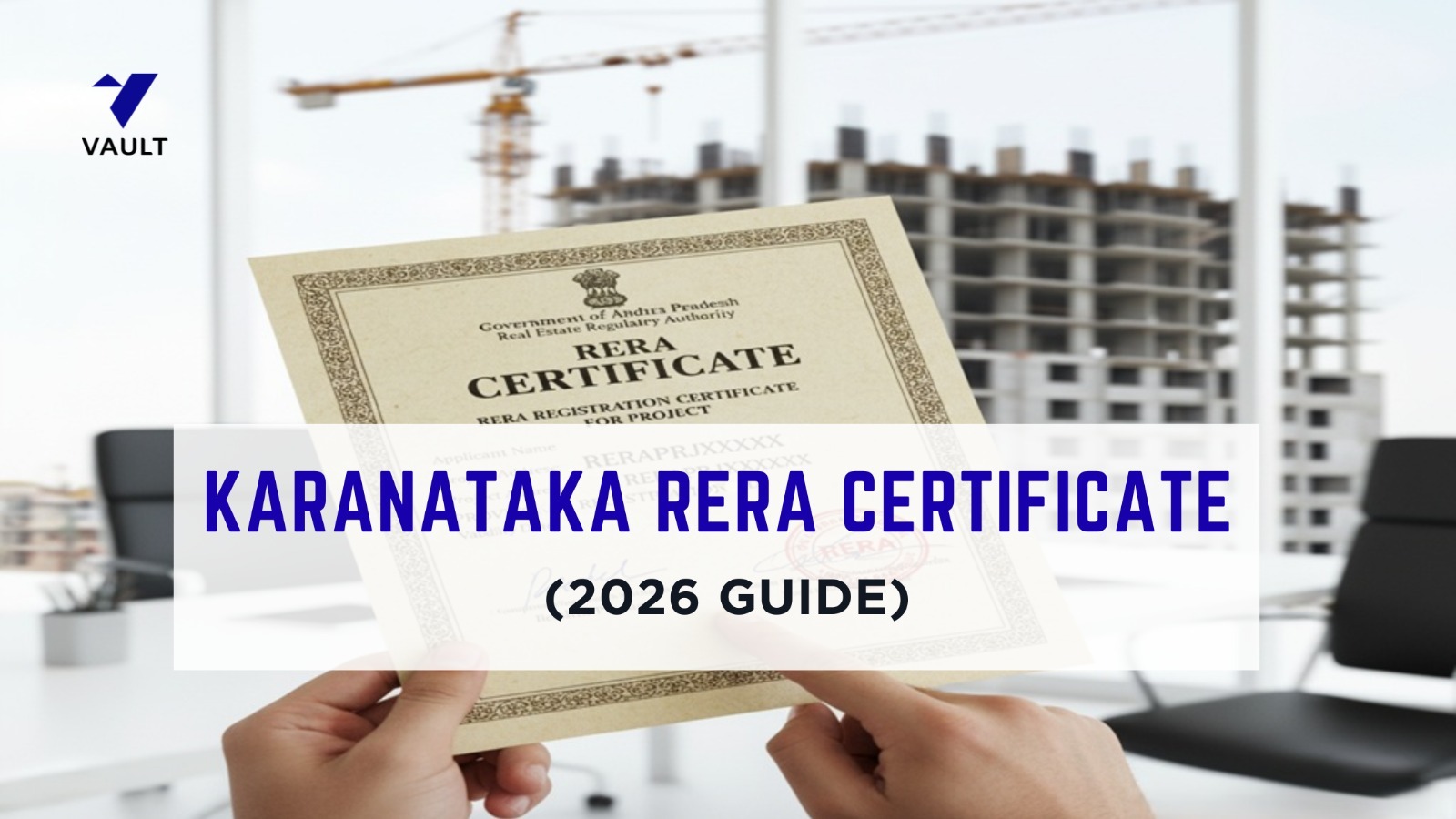
Learn what a RERA certificate is, how to check and download RERA registration in Karnataka, and why RERA approval is important for property buyers and investors.
Quick Summary (TL; DR)
A RERA certificate confirms that a real estate project, builder, or agent in Karnataka is legally registered under the RERA Act, 2016. It protects buyers through transparency, fixed timelines, and financial safeguards. Always verify and download the RERA certificate from the official KRERA portal before investing to avoid legal risks and future disputes.
What Is a RERA Certificate?
A RERA certificate is an official proof issued by the Karnataka Real Estate Regulatory Authority (KRERA). It confirms that a project, builder, or real estate agent is legally registered under the RERA Act 2016. Buying or selling property without checking the RERA certificate can expose buyers and investors to legal and financial risks. In Karnataka, the RERA certificate confirms that a real estate project, promoter, or agent is registered under the Real Estate (Regulation and Development) Act, 2016.
Only RERA-registered entities are allowed to:
- Advertise property
- Sell residential or commercial units
- Collect advance payments from buyers
In Karnataka, all eligible projects must be registered before marketing begins.
What Does RERA Stand For?
RERA stands for Real Estate (Regulation and Development) Act.
The Act came into force in 2016 to:
- Protect home buyers
- Increase transparency
- Reduce project delays
- Hold builders accountable
Each state has its own RERA authority. In Karnataka, it is governed by KRERA.
Why Is a RERA Certificate Important?
A valid RERA certificate safeguards buyers and investors in several ways:
- ✓ Legal compliance: Confirms the project follows approved plans.
- ✓ Delivery timelines: Builders must declare possession dates.
- ✓ Transparency: All project details are publicly available.
- ✓ Legal remedy: Buyers can file complaints if commitments are not met.
Buying a non-RERA project exposes buyers to delays, disputes, and loss of money.
Who Must Register Under RERA in Karnataka?
Under KRERA rules, registration is mandatory for:
- Builders / Promoters launching new projects
- Ongoing projects without completion certificates
- Real estate agents and brokers facilitating sales
Projects below 500 sq. meters or 8 apartments may be exempt, subject to conditions.
How to Check RERA Certificate Online in Karnataka?
You can verify a RERA certificate online through the official KRERA portal.
Steps to Check RERA Registration:
- Visit the Karnataka RERA official website
- Select “Search Project” or “Search Agent”
- Enter the RERA registration number or project name
- View registration status, validity, and approvals
Always cross-verify before making any payment.
How to Download RERA Certificate in Karnataka?
Many users search for “RERA certificate download Karnataka”, but it is important to understand the process correctly.
RERA Certificate Download Process:
- The registration certificate is available inside the project or agent profile
- Certificates can be viewed and saved as PDF
- Download options vary based on project type and registration status
If a certificate is not visible, it usually means:
- Registration is under review
- Approval has expired
- The project is not registered
RERA Certificate for Builders and Promoters
Builders must obtain RERA project registration before advertising.
Key obligations include:
- Uploading approved plans
- Declaring project timelines
- Updating construction progress quarterly
- Maintaining a separate escrow account
Non-compliance can lead to penalties, registration cancellation, or legal action.
RERA Certificate for Real Estate Agents
All property brokers in Karnataka must hold a RERA agent registration certificate.
Agent Registration Benefits:
- Legal authority to sell RERA projects
- Higher buyer trust
- Reduced risk of penalties
Agents operating without registration may face fines or suspension.
RERA Certificate vs Non-RERA Projects
| Aspect | RERA Registered | Not Registered |
|---|---|---|
| Legal protection | ✓ | × |
| Approved plans | ✓ | × |
| Buyer complaint remedy | ✓ | × |
| Fund usage control | ✓ | × |
| Transparency | ✓ | × |
What Is the RERA Act in Karnataka?
The RERA Act in Karnataka regulates:
- Project approvals
- Builder responsibilities
- Buyer rights
- Dispute resolution
KRERA operates from Sampangi Nagar, Bengaluru, and handles:
- Project registration
- Complaints
- Appeals and penalties
How Vault Proptech Simplifies Property Documentation
Understanding RERA documents can be confusing, especially when multiple approvals are involved. Vault Proptech helps property owners by organizing, reviewing, and validating property documentation for accuracy and completeness.
Verify your property’s RERA status and documentation accuracy before making any commitment.