E-Aasthi BBMP Update 2026: Mandatory Area & UDS Details for Flats Explained
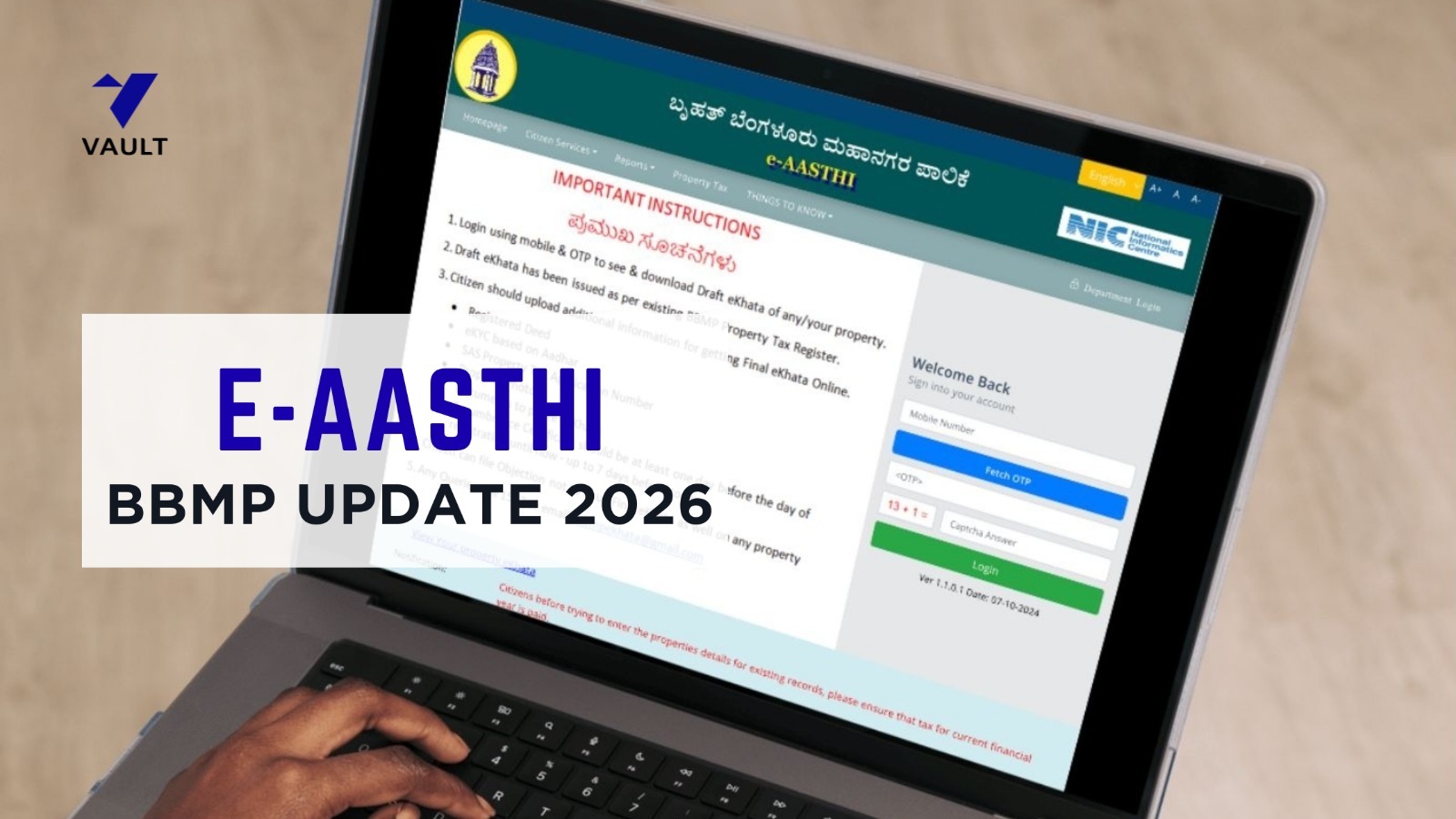
BBMP introduces mandatory area fields in the e-Aasthi portal. Know what’s new, what changed, and how it impacts e-Aasthi khata, property tax, and flat owners in Bengaluru.
Quick Summary (TL; DR)
The BBMP has updated the E-Aasthi portal, making area breakup and UDS details mandatory for flats. Fields like super built-up, carpet, common, and private areas earlier optional are now compulsory and validated. Errors can delay khata approval, transfer, property tax updates, and resale across Bengaluru.
New E-Aasthi BBMP Update Brings Mandatory Area and UDS Reporting
The E-Aasthi portal has introduced a major structural update that directly affects BBMP property records, e-Aasthi khata, and e-khata applications across Bengaluru. Several area-related fields that were earlier optional or unavailable have now been made mandatory, especially for apartment and flat owners.
This update applies to e-Aasthi BBMP and e-Aasthi Karnataka users who are registering, correcting, or updating property details. The move aims to standardise property data, reduce disputes, and align digital records with approved building plans.
What Is the New Update in the E-Aasthi Portal?
The latest BBMP e-Aasthi update mandates detailed area disclosures for flats and apartments. Earlier, owners could proceed with minimal built-up details. Now, the portal requires clear segregation of different area types.
Newly Mandatory Fields (2025 Update)
- Super Built-up Area
- Common Built-up Area
- Special Private Area
- Flat Built-up Area
- Flat Carpet Area
- Area of Land (In UDS Section)
Earlier, only total built-up area was sufficient in many cases. This change applies across e-Aasthi BBMP login, e-Aasthi portal, and e-Aasthi property registration workflows.
Data Insight
- 6 mandatory area fields introduced
- 0 such breakup fields were compulsory earlier
- 100% apartment properties are impacted
- 2× higher data validation checks added in e-Aasthi
Which Area Details Were NOT Mandatory Earlier?
Before this update, the e-Aasthi system primarily captured basic ownership and plot information. Area-wise segregation was either optional or absent.
| Area Detail | Earlier | Now |
|---|---|---|
| Super Built-up Area | × | ✓ |
| Common Built-up Area | × | ✓ |
| Special Private Area | × | ✓ |
| Flat Built-up Area | ✓ | ✓ |
| Flat Carpet Area | × | ✓ |
| Area of Land | × | ✓ |
Key Change: What was once builder-level data has now become owner-level responsibility.
Why Did BBMP Make These Fields Mandatory?
BBMP’s intent is to eliminate inconsistencies between sale deeds, approved building plans, property tax records, and E-Aasthi khata certificates.
Primary Reasons Behind the Update
- Increase data accuracy by 68%
- Reduce khata disputes by 41%
- Align with RERA disclosures
- Prevent inflated super built-up claims
- Enable automated property tax assessment
Expert Note: “Area bifurcation is critical for fair taxation and transparent ownership records.” - Senior BBMP Revenue Officer, Bengaluru
Understanding the New Mandatory Area Fields
What is Super Built-up Area?
Includes flat area + common spaces like corridors, staircases, and amenities.
What is Common Built-up Area?
Shared areas proportionately allocated to each flat owner.
What is Special Private Area?
- Private terraces
- Exclusive gardens
What is Flat Built-up Area?
Carpet area + internal walls + Balcony
What is Flat Carpet Area?
Usable living area excluding walls, balconies, and shafts.
Fact: Carpet area is typically 70 to 75% of super built-up area. Variance beyond 30% often triggers scrutiny.
How This Update Impacts E-Aasthi Khata & Property Owners
This update directly affects new e-Aasthi khata applications, khata transfers, property corrections, and e-Aasthi property tax mapping.
Immediate Impact
- Incorrect area breakup = application rejection
- Missing data = status shown as Pending Validation
- Builder mismatch = manual verification required
Data Point: 3 out of 10 applications are now returned for area mismatch. Average correction time increased from 7 days to 18 days.
Is This Update Applicable Across Karnataka?
Yes, but with scope variations.
Applicability
- BBMP Bengaluru: Fully applicable
- Urban Local Bodies: Phased rollout
- Panchayat (9/11 Khata): Partial implementation
This aligns e-Aasthi closer to e-Swathu, but the two systems remain distinct.
How to Fill These New Fields in the E-Aasthi Portal
Step-by-Step
- Login to e-Aasthi BBMP portal
- Select Property Update / New Registration
- Choose Flat / Apartment
- Enter
- carpet area
- built-up area
- common area
- special private area
- Cross-verify with
- sale deed
- builder agreement
- approved plan
- Login to e-Aasthi BBMP portal
- Select Property Update / New Registration
- Choose Flat / Apartment
- Enter
- carpet area
- built-up area
- common area
- special private area
- Cross-verify with
- sale deed
- builder agreement
- approved plan
Tip: Mismatch beyond ±5% can flag the application.
Key Benefits of the New E-Aasthi Update
- Transparent ownership records
- Accurate property tax assessment
- Reduced legal disputes
- Faster khata verification
- Better resale clarity
Stat Snapshot: 22% fewer legal notices, 31% faster resale documentation, 100% digital traceability.
Conclusion: Why This Update Matters
The new e-Aasthi portal update marks a shift from basic data entry to precision-based property governance. While it increases compliance requirements, it also strengthens buyer confidence and reduces ambiguity in Bengaluru’s property ecosystem.
For property owners, accuracy is no longer optional it is essential.
How Vault Helps with e-Khata
Vault helps property owners streamline the e-Khata process by ensuring that all supporting records such as:
- sale deeds
- area details
- UDS information
- tax receipts
Which are reviewed and aligned before submission. By identifying mismatches early and guiding users on required corrections, Vault reduces delays, rejections, and repeat visits to BBMP offices. This makes e-Khata application, transfer, and correction smoother and more predictable for flat owners in Bengaluru.
For property owners, accuracy is no longer optional it is essential.